Thinking about having a Solar Farm Built?
Building a solar farm presents an exciting opportunity to contribute to clean energy generation in a world increasingly focused on renewable energy. This comprehensive pathway will walk you through starting a solar farm, from planning and design to construction and operation. Let's delve into the details of each potentially needed step to help you embark on your solar farm journey.

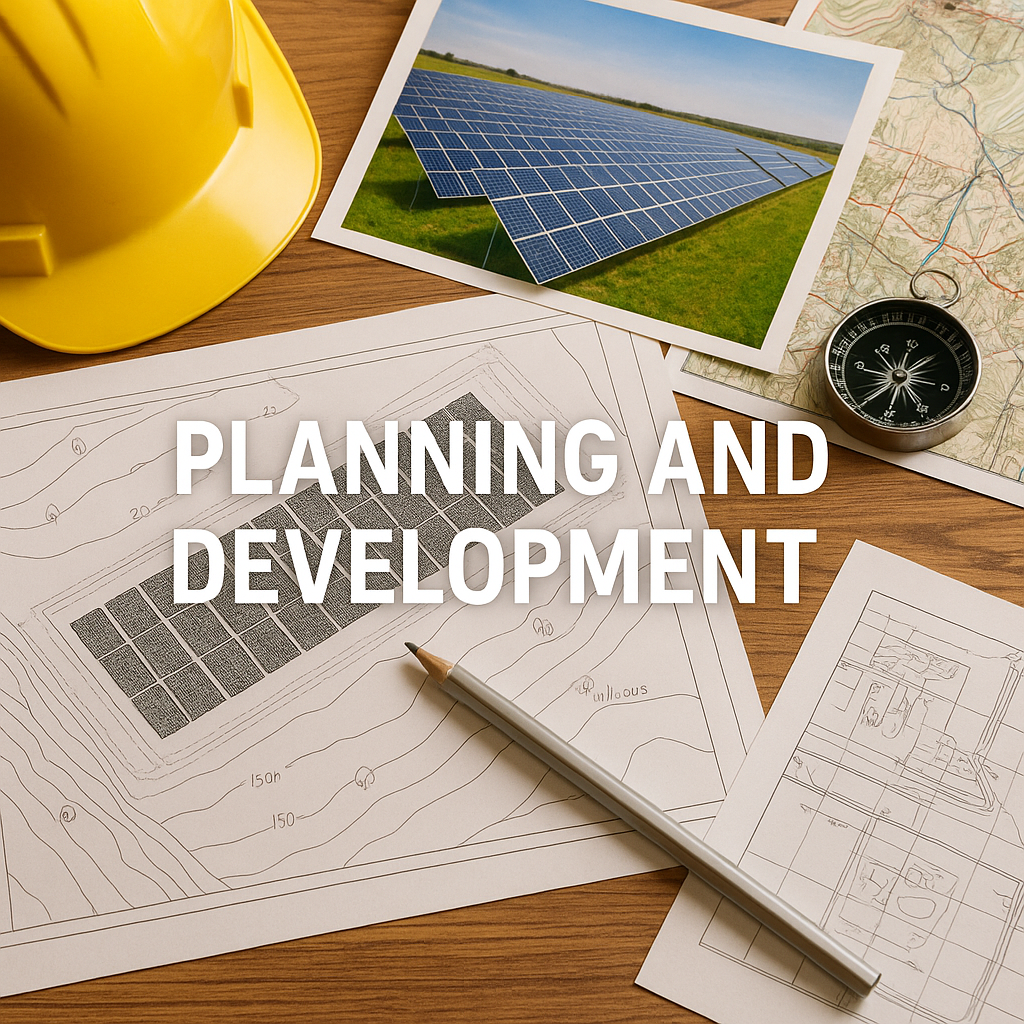
Planning and Preparation
The planning phase is crucial for laying the foundation of a solar farm.
Site Selection
- Sunlight Patterns and Solar Irradiance
- Land Topography, drainage, flood risk, soil stability
- Proximity to Electrical Grid, substations, transmission lines
- Environmental Impact Study, ecological concerns
Feasibility Study
- Assess solar potential and historical weather patterns
- Determine financial feasibility of proposed site
- Identify required permits and regulatory approvals
- Evaluate local electrical grid capacity
- Evaluate community concerns to streamline permits
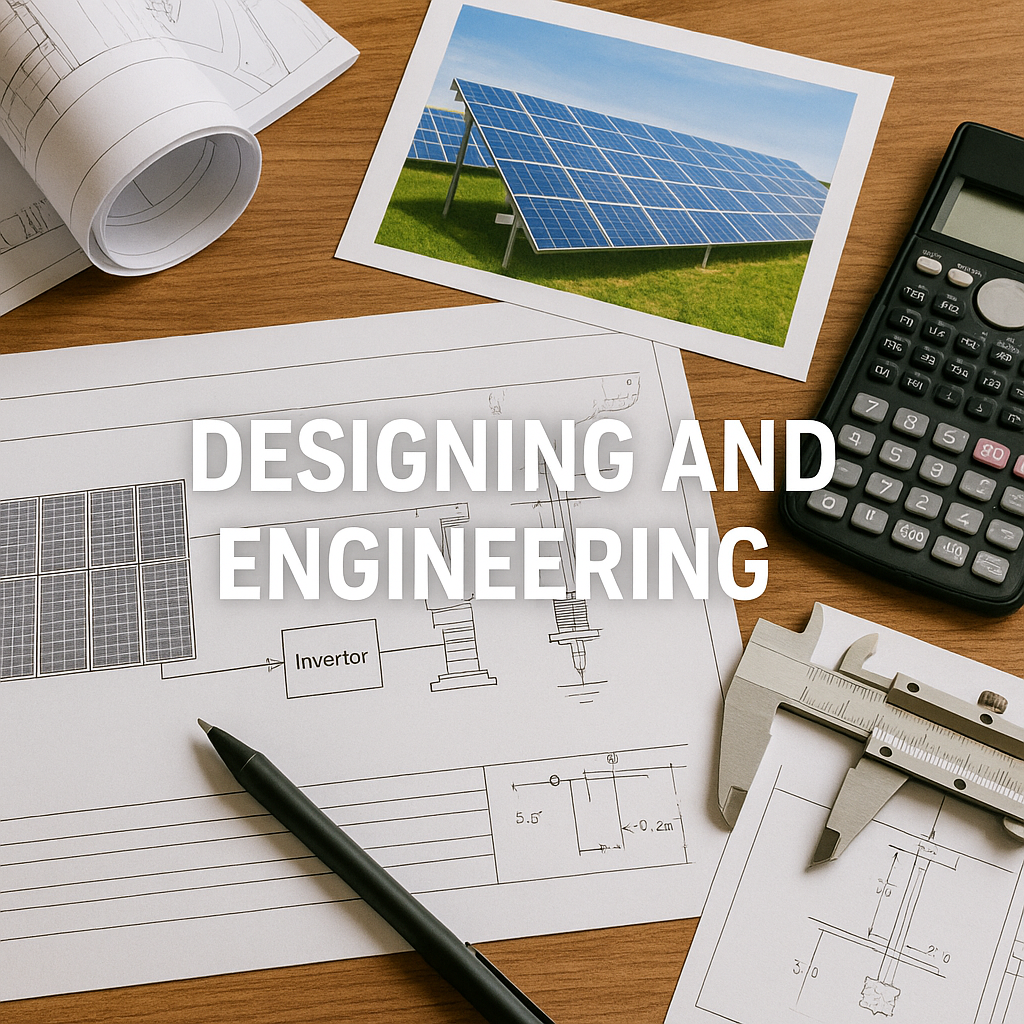
Designing and Engineering
The designing phase creates efficient and optimization.
System Sizing and Layout
- Evaluate the land’s dimension, shape and potential limits
- Design layout to maximize panel placement
- Consider how future expansions might be achieved
- Design to reduce potential transmission losses
Component Selection
- Evaluate different types of solar panels to maximum output
- Select inverters that maximize efficiency and reliability
- Choose sturdy mounting structures that match the terrain
- Choose components, cables, connectors, etc. that ensure seamless integration into the electrical grid
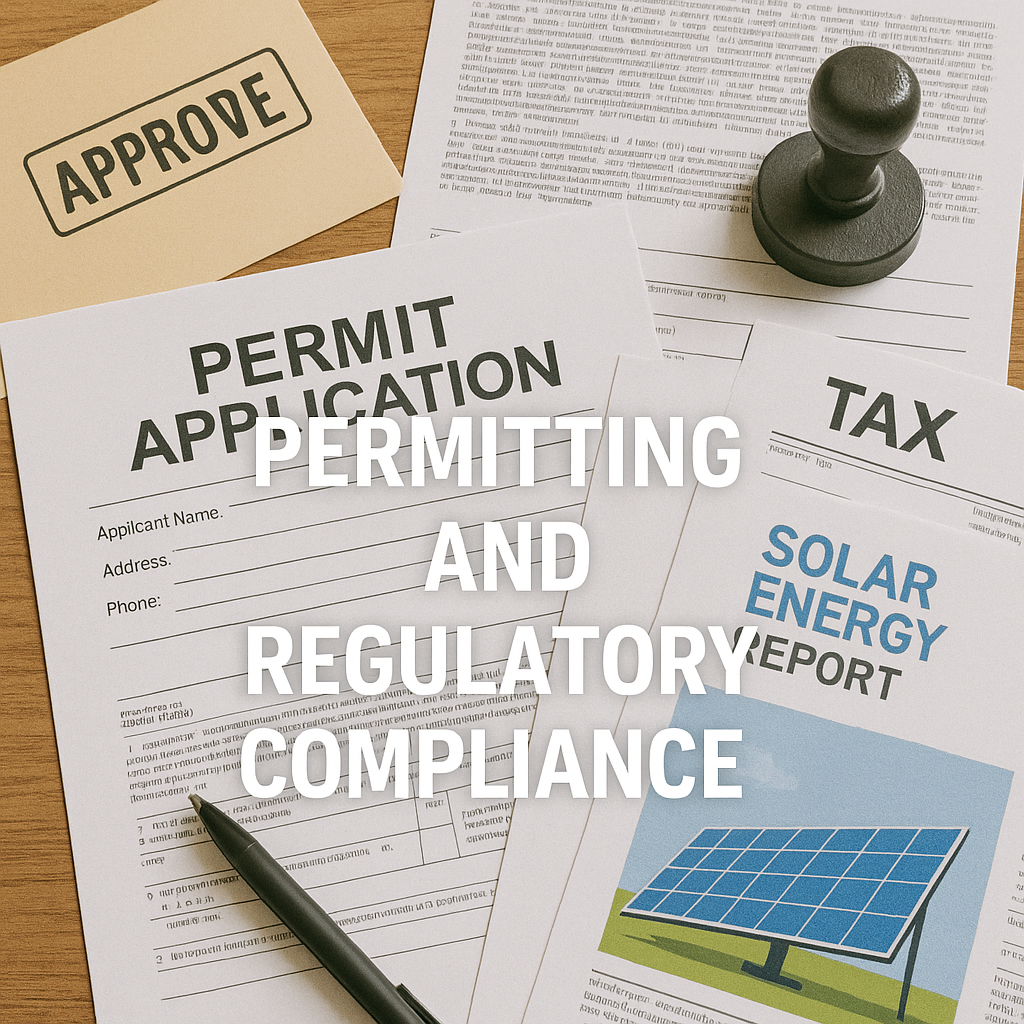
Permitting and Compliance
The phase includes complying by obtaining permits as needed
Permitting Process
- Assess the environment impacts, as required by law
- Ensure compliance with zoning, if needed
- Secure construction permits, as needed
- Obtain agreements with local electrical authorities
Engaging with Local Authorities
- Educate community about benefits
- Collaborate with local governments, planning commissions, and regulatory bodies to ensure compliance
- Consult with environmental and conservation organizations to understand their concerns and incorporate measures to mitigate environmental impacts
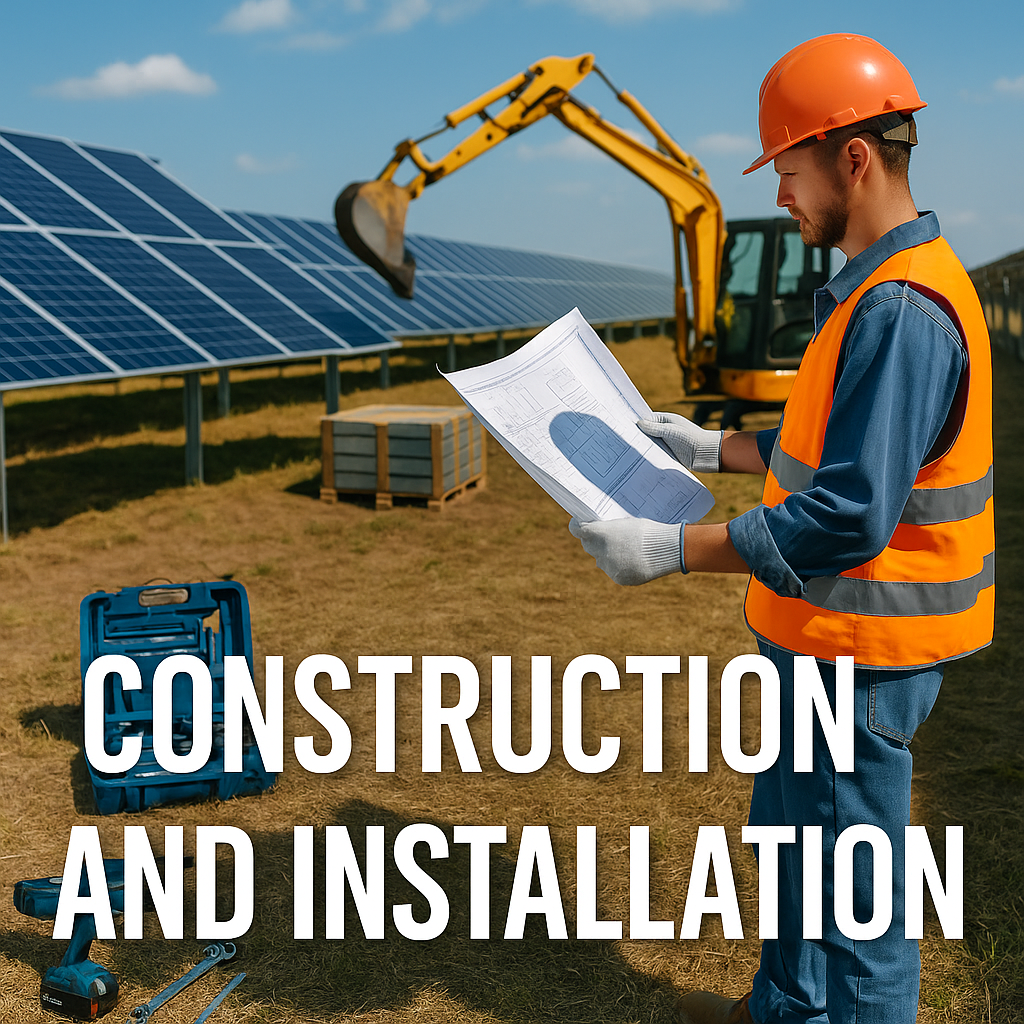
Construction and Installation
The phase is where you see YOUR solar farm take place
Site and Solar Panel Preparation
- Clear vegetation that could obstruct sunlight to panels
- Grade and level the ground as needed
- Create or improve access roads, security, and drainage
- Carefully and securely mount solar panels and check for alignment
- Connect solar panels into series that lead to inverters
System Setup and Integration
- Install inverters that convert solar to AC for power grid
- Install transformers to maintain proper voltage in farm
- Connect all components according to codes to test for output and to ensure safety and ease of maintenance
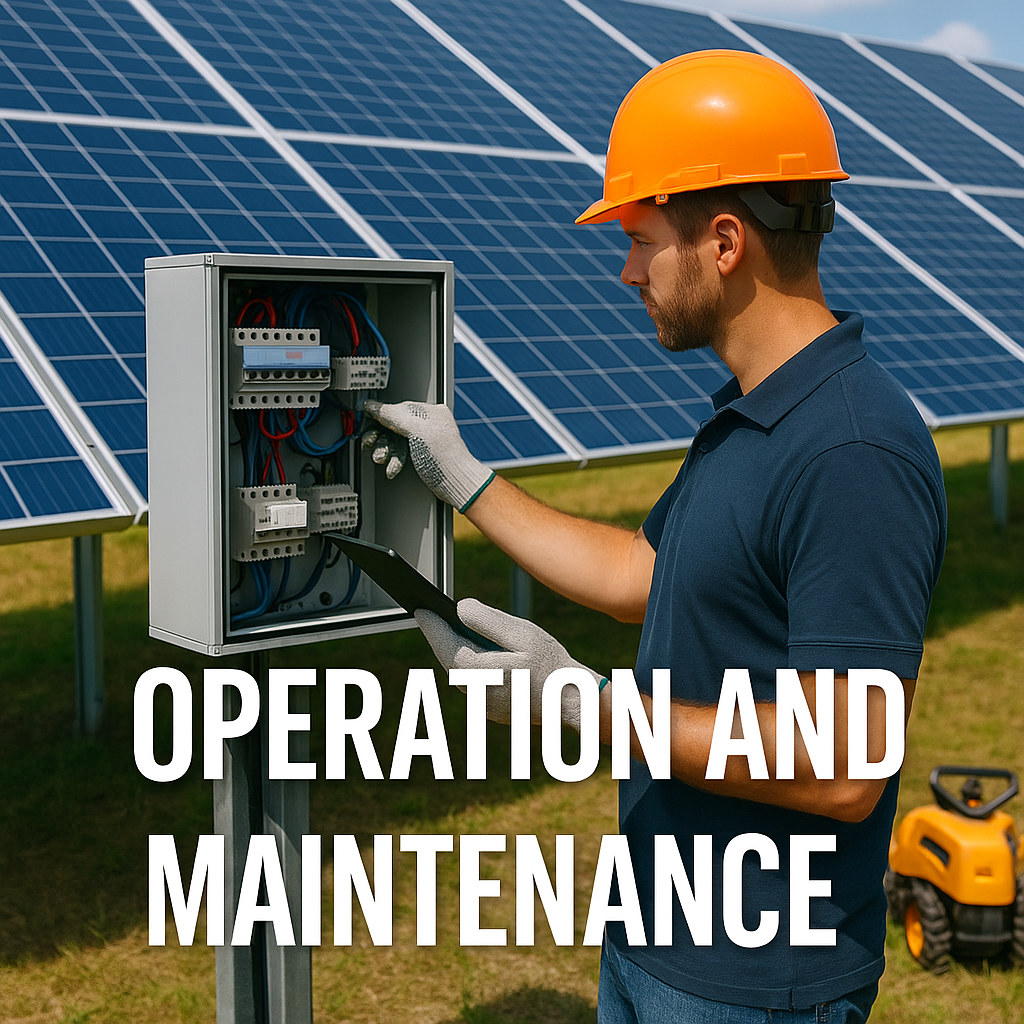
Operation and Maintenance
The phase is ongoing. It is where monitoring, repairs, and upgrades occur to keep the farm optimized
Monitoring and Performance
- Utilize monitoring systems to track and analyze energy production
- Implement a comprehensive fault detection system to identify and address any equipment malfunctions or performance issues promptly. Regularly inspect the system for signs of damage, loose connections, or abnormal behavior
Maintenance
- Regular schedule to clean panels to remove dust, dirt, and debris
- Monitor and maintain vegetation growth
- Conduct performance tests to evaluate total efficiency